
AIA Government Affairs & Public Policy: The architect’s voice in Washington, D.C.
Tackle urgent issues with AIA
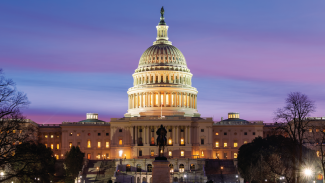
Advocate for architects
Policy moves fast. We stay ahead of it. Government Affairs & Public Policy advises and mobilizes 101,000+ members to shape policies that support you – your business, your community, your firm, your profession. Our aim is to support the business and practice of architecture and expand architects' influence in their communities.
We champion policies that allow you to do your best work–pro architectural business incentives, smart public investment, and improved codes and standards–by working with you to create a stronger voice that shapes the built environment. Government Affairs tracks the legislative landscape internationally, federally, at the state level, and in your own backyard. We push for progress and ask you to help us move it along.
AIA’s new report shows architects and policymakers how to fund, finance, and deliver regenerative projects that restore ecosystems and strengthen communities.

AIA Joins Coalition Filing Amicus Brief to Protect White House
Coalition of national and local nonprofit organizations have filed a “friend of the court” brief supporting the National Trust for Historic Preservation’s lawsuit challenging the Trump Administration’s demolition of the White House East Wing and construction of a new ballroom.
Find out what AIA is doing to protect the White House grounds
Photo by Eric Lee/Getty Images
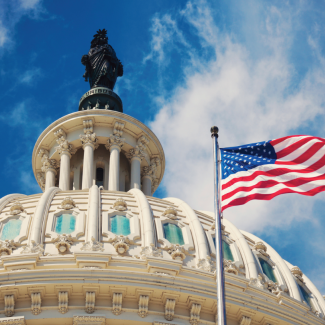
Preserving Washington, D.C. landmarks

AIA on the Federal Definition of 'Professional'

AIA on Climate Protections
See what you can do advocate on behalf of the architecture community.
About AIA Government Affairs
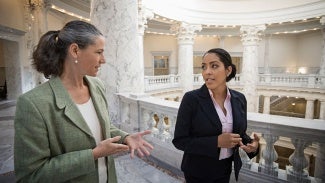
Federal affairs
The more involved members are at the federal level, the greater the positive impact on businesses, communities, and the profession at large. Our top issues include housing, tax and business policies, climate action, and resiliency. Learn more about our platform and recent federal policy campaigns.

ArchiPac®
AIA's bipartisan political action committee, ArchiPac, supports pro-architect candidates for federal office who will shape policies on design, practice, and the economy. It's one more way we promote prosperous, sustainable, and equitable communities that benefit all.
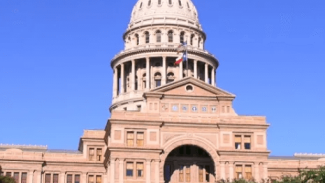
State & local affairs
Every advancement starts at home. When architects work with state and local elected officials, they influence positive outcomes on the issues that matter most to their communities. This means having a seat at the table when important civic decisions are made.

International affairs
AIA’s global drive for change involves providing resources for members practicing overseas, coordinating and maintaining bilateral agreements with international architectural organizations, and supporting international chapters in Canada, Continental Europe, Shanghai, Hong Kong, Japan, the Middle East, and the United Kingdom.

Codes & standards
Codes and standards are the foundation of all we design and build. They are crucial for ensuring safety, accessibility, and sustainability in the built environment. Codes and standards provide the minimum requirements for design, construction, and materials ensuring structural integrity, fires safety, health, and safety of the public and the occupants.